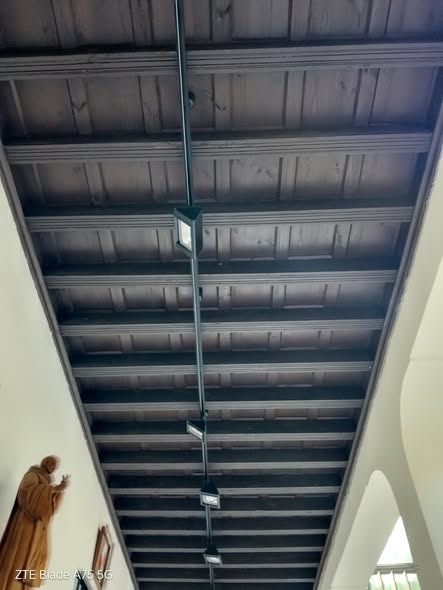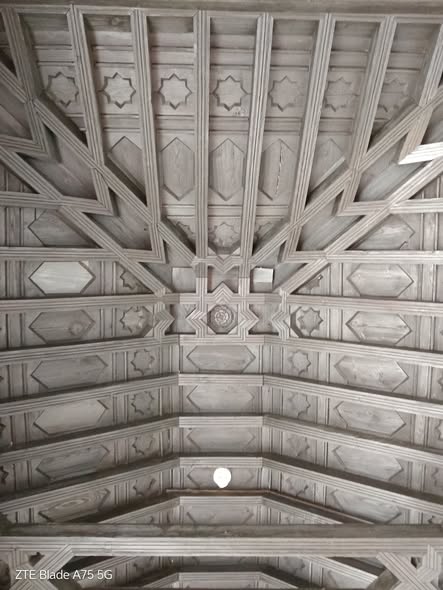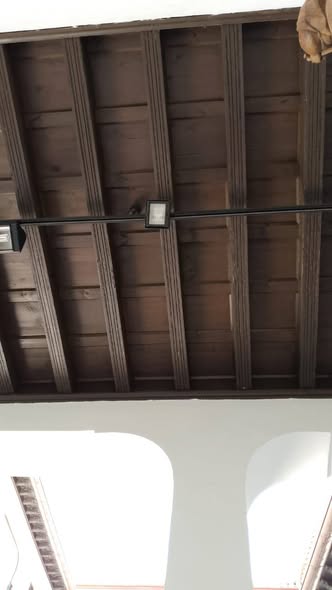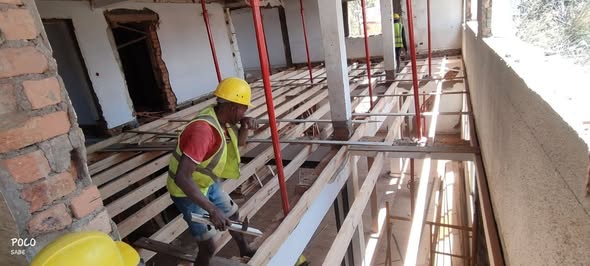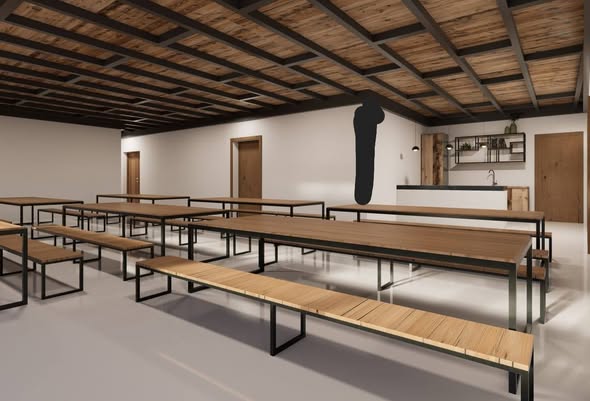














While traveling and discovering firsthand the marvel of Mudéjar woodwork, I kept sharing photos with contractors working on very specific projects, hoping to spark ideas. They, in turn, shared their own methods for evolving toward that style—when suddenly Mario exclaimed, “You guys are copying Ambohimanga!” Someone nearby gently added, “We really should hire Zafimaniry carpenters—with their tools we can’t go wrong.”
The Zafimaniry of Madagascar sustain a unique timber architecture in which every house is a living testament to craft and ancestry. Built entirely without nails, their dwellings rely on intricate wood joinery and are clad in shutters and panels carved with dense geometric motifs that encode family history and natural cycles. Now recognized by UNESCO as intangible heritage, this architecture functions as both shelter and narrative, where each pattern conveys lineage and each precisely fitted joint reflects generations of patient skill.
Mahandrihono, meanwhile the principal residence of the Ambohimanga rova, embodies the Merina royal ideal in a single, elegant structure. Built of dense rosewood on a square plan with a sacred central post (andry), it uses precise mortise-and-tenon joinery and a steep double-thatched roof to resist both time and climate. Raised on a stone plinth and oriented to the east, the house commands its ceremonial forecourt, turning architecture into a statement of authority. Every material choice—from hardwood walls to flexible raffia roofing—expresses the balance of permanence and renewal that defined Andrianampoinimerina’s vision for a unified Madagascar.
Mudéjar woodwork isn’t about a particular wood treatment; it’s a tradition of Spanish carpentry that creates decorative doors, ceilings, and other architectural details, rich with geometric patterns and polychrome painting. Artisans worked with common woods, protecting them with gesso or animal-glue layers, then applying pigments—iron oxides, cinnabar, carbon black—using oil-based techniques to achieve their striking ornamental effects.
I can’t help but feel a quiet pride when I hear their excitement as they brainstorm and experiment, blending new techniques with age-old craftsmanship. To me, that’s the essence of practicing architecture: building with care and sustainability, while never losing sight of innovation.