





Title of Exhibition : VINTANA
Concept, research and design: Joan Razafimaharo.
Visualisation and drawings: Joan Razafimaharo.
Images: © Joan Razafimaharo, unless otherwise stated.
Curatorial text :
Madagascar is known for its endemism and extraordinary biodiversity, yet the philosophical worldview through which Malagasy people understand the world remains far less widely known. It is expressed in the built environment and embedded in Malagasy cosmology. It is called Vintana. Malagasy space carries a different meaning from space as it is commonly understood in the West: it is denser, infinite and mutable, and inhabited by the invisible.
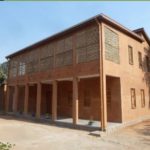
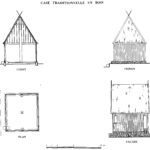
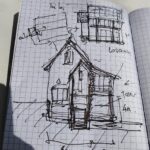
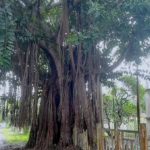
Besakana, the great royal hut of the seventeenth century, embodied this archetype of Malagasy housing by translating the imaginary into material form. Among the Sakalava and Merina tribes, traditional dwellings followed a precise ordering of the cardinal points through the placement of their pillars. The central axis of the building represented the Tree: a symbolic axis of space that sustained the balance and order of the world. As in many African architectural traditions, Malagasy architecture reproduces geometric patterns, self-similar structures and systems capable of organising themselves through fractal forms.
In Malagasy culture, systems of classification encompass plants, animals, social categories, the living and the dead. Today, however, these landmarks have become disorganised. As references are lost and systems of relation are disrupted, the society that was once structured through this codification is undergoing a profound transformation.
Developed from an earlier independent research and installation proposal from 2023, I seek to recreate VINTANA through an installation that gives material form to the invisible while making this disorder perceptible. The Manifesto asks how vernacular intelligence can be understood as a living resource: an active way of responding to climate, material constraint and collective life.
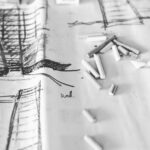
The installation is conceived as a suspended field of threads, fibres, earth-toned surfaces and fragmented architectural references. Its elements evoke VINTANA as a threshold, an opening and a moment of orientation—where interior and exterior, memory and projection, structure and fragility meet. Rather than reconstructing a lost form, the work stages an encounter with what remains: gestures, proportions, material knowledge and collective rhythms that persist beneath visible change.
In this sense, VINTANA instead of becoming a nostalgic return to tradition is rather an invitation to listen to vernacular knowledge as an evolving practice of care, adaptation and relation. By bringing these fragments into the exhibition space, the installation asks what forms of architecture might emerge when inherited intelligence is not erased, but allowed to speak again.
The work also considers the consequences of rupture: the displacement of local materials, the weakening of intergenerational transmission and the gradual separation between architecture and the landscapes that once informed it. Its suspended composition holds this tension between absence and continuity. Each thread becomes both a fragile trace and a connective line, linking ground to roof, body to territory, and past experience to future possibility. VINTANA proposes that repair instead of returning to an idealised past will mean creating the conditions for knowledge, materials and communities to reconnect, transform and endure.
Captions :
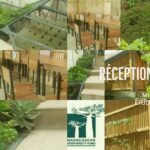
Figure 1. VINTANA, installation rendering, 2026. © Joan Razafimaharo