
















In light of today’s prolonged floodings—now lasting weeks or even months—many contemporary urban planning narratives frame Basse-Ville areas as opportunities: zones to be cleared, densified, or speculated upon because they are deemed “non-productive” or reduced to slums. This logic repeats a familiar erasure. It treats flood-prone districts as failures rather than as evidence of disrupted systems, overlooking the fact that these landscapes were once among the most productive and carefully managed parts of the city. In both Antananarivo’s basse ville and former colonial towns in Vietnam, what is now labeled unproductive is often the result of abandoning vernacular water infrastructures and the social practices that sustained them. By forgetting how past communities drew resilience, food, and protection from these wetlands, planning discourse risks compounding vulnerability—replacing living landscapes with speculative terrain, and memory with short-term gain.
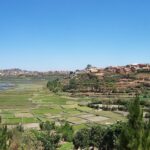
In Madagascar, quiet, place-based knowledge has long shaped collective survival—particularly in the urban wetlands of Antananarivo. The Betsimitatatra plain, which historically covered tens of thousands of hectares and still makes up a substantial portion of the city’s footprint, was shaped over centuries by communal water management and rice cultivation supported by networks of canals and dikes built by local foko under Merina leadership. These earthworks and shared practices functioned as living infrastructure, balancing seasonal water flows and sustaining both human and ecological life. Today, however, rapid urbanization, land filling in flood zones, and incomplete water-sanitation projects have disrupted this balance, undermining the very hydraulic intelligence that once regulated water and protected communities. The result is not just physical vulnerability to floods but the erosion of eco-social memory—an erasure of the very techniques and commitments that made Betsimitatatra central to the city’s resilience.
Comparable approaches can be found across Asia, where water management and cultivation systems evolved through long-term observation rather than formal engineering. From rice terraces to canal networks and seasonal floodplains, communities developed techniques that balanced productivity with ecological resilience. These systems relied on collective maintenance, ritualized calendars, and intimate knowledge of monsoons, soils, and plant cycles. Like Betsimitatatra, they functioned as living infrastructures—adaptive, low-tech, and deeply social—yet are increasingly marginalized as cities expand and standardized solutions replace local practice.
Colonialism marked a decisive rupture in these vernacular systems. In Antananarivo, the lower city—la basse ville, largely overlapping with the Betsimitatatra wetlands—was reimagined through colonial planning as a space to be controlled, drained, and reordered. French colonial authorities prioritized rigid sanitation schemes, road grids, and land reclamation over existing hydraulic logics, treating wetlands as unhealthy voids rather than productive, inhabited landscapes. This shift did not simply alter infrastructure; it displaced knowledge. Communal maintenance of canals and dikes was weakened, wetlands were infilled, and the social contracts that sustained water management were progressively dismantled.
Similar processes unfolded in colonial Southeast Asia, particularly in Vietnam, where French urbanism reshaped delta cities and river towns. In places like Hanoi and Saigon, colonial planning imposed straight canals, embankments, and zoning systems that disrupted long-standing relationships between seasonal flooding, agriculture, and settlement. Informal or adaptive water practices—once central to urban life—were reframed as backward or unsanitary, while colonial infrastructure privileged extraction, circulation, and administrative control. As in Antananarivo’s basse ville, these interventions fractured local hydrological intelligence and increased long-term vulnerability to floods.
Across these contexts, colonial modernity did not merely replace one system with another—it selectively erased practices rooted in care, maintenance, and collective responsibility. Wetlands that once functioned as living infrastructures were reduced to marginal spaces, later absorbing the pressures of post-colonial urban growth. The consequences remain visible today: heightened flood risk, informal settlement in former buffer zones, and a widespread forgetting of how cities once lived with water rather than against it.