



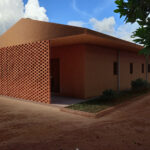

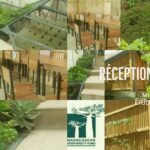



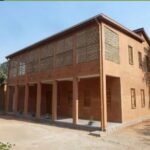
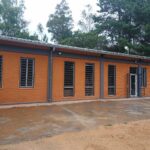


In coastal Morondava, resilience is being strengthened through the “Building Urban Climate Resilience in South-Eastern Africa” project, funded by the Adaptation Fund and implemented locally with UN-Habitat, OXFAM, DiMSUR and municipal partners. This initiative, active from 2020 and continuing its effects today, combines nature-based solutions with infrastructure and community planning to respond to cyclone and flood exposure. In Morondava, priority actions have included the rehabilitation of 182 hectares of mangroves to enhance coastal protection, the establishment of a city-wide early warning system for floods, improved urban drainage, construction of resilient bridges and elevated roads, and the development of a multi-purpose safe haven for communities during extreme weather. These measures are designed not just to mitigate immediate risks but to deepen adaptive capacity by integrating local participation, ecological restoration, and urban planning processes that work with water and terrain rather than against them.
Cyclone season now shapes urban life across Madagascar, inviting a renewed attention to how towns relate to water. From coastal settlements to highland cities, prolonged rains and saturated soils reveal the importance of landscapes capable of absorbing, slowing, and storing water. These conditions highlight not weakness, but the urgency—and opportunity—of rethinking urban resilience in ways grounded in land, climate, and collective care.
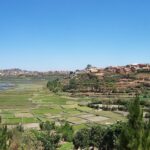
In Antananarivo, the Betsimitatatra plain offers a powerful reference. Long before modern planning, this low-lying landscape functioned as an active hydraulic system, supported by wetlands, canals, and earthen dikes maintained through shared responsibility. It buffered floods, sustained food production, and adapted to seasonal variability. Today, its traces remain visible, suggesting that resilience is not something to be invented anew, but something that can be reactivated and reinterpreted.
Contemporary practice elsewhere shows how such reactivation is possible. In China, landscape architect Kongjian Yu has articulated the Sponge City approach, which treats water as a design partner rather than a threat. By integrating wetlands, floodable parks, and permeable urban surfaces, Sponge City projects transform low-lying land into civic infrastructure that performs during extreme rainfall. These strategies resonate strongly with principles long embedded in Malagasy landscapes, where water management relied on patience, maintenance, and ecological intelligence.
Seen through this lens, today’s cyclones are not only hazards but signals—calling for cities that work with water at multiple scales. Reinvesting in wetlands, restoring floodplains, and valuing low-lying land as productive space can strengthen urban life while honoring inherited knowledge. As climate patterns intensify, Malagasy towns have the chance to draw from both ancestral practices and contemporary landscape thinking to shape cities that remain livable, adaptable, and deeply connected to their terrain