



circular spindle-whorl–based print by Susan A. Point, shown at the National Gallery of Canada in Ottawa, Canada, as part of Perpetual Salish: Coast Salish Art in the Classroom (2010s).
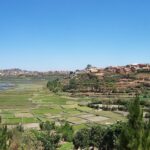
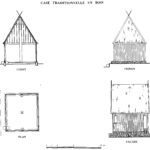
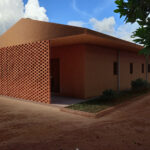
As a highly educated Québécoise Madagascar born French educated immigrant, I became aware—perhaps for the first time—of what I had not been taught. Despite years of academic training in Canada, I was never meaningfully confronted with Indigenous visual languages, epistemologies, or ethical frameworks as living systems of thought. Encountering Salish art therefore felt less like a discovery of the “other” than a delayed recognition—an experience uncannily similar to my later return to Malagasy language, memory, and cultural depth. In both cases, knowledge had been structurally present yet institutionally absent. I left Madagascar to become a Canadian-educated architect; I returned to Madagascar carrying Canadian tools, methods, and credentials. Today, I find myself in Canada not as I left it, but as an Indian Ocean–trained architect—shaped by archipelagic thinking, plural temporalities, and relational practice. This double movement has unsettled any singular identity, but it has also clarified my position: to work between worlds without flattening them, and to recognize that cultural roots, like Salish visual forms, are not origins behind us but structures we continue to grow into.
Salish art forms emerge from one of the oldest continuously inhabited cultural landscapes on the Pacific coast of North America. Long before colonial borders, Coast Salish societies developed complex systems of governance, trade, kinship, and ecological stewardship structured around waterways, seasonal movement, and intergenerational transmission of knowledge. Their visual language grew primarily through weaving, spindle whorls, house posts, reef-net technology, and ceremonial objects, rather than through monumental carving alone. As a result, Salish aesthetics emphasize process, rhythm, and relational balance over fixed iconography.
Historically marginalized and long misclassified as “less developed” than neighboring Northwest Coast traditions, Salish art was for decades rendered nearly invisible in museums and art history. Only in the late 20th century—through the work of Salish artists, educators, and cultural advocates—did this visual language begin to be recognized as intellectually rigorous and philosophically distinct. Contemporary Salish art therefore carries a double charge: it is both an act of cultural continuity and an ethical intervention, reclaiming visibility while refusing assimilation into dominant aesthetic hierarchies. Programs such as Perpetual Salish insist that Salish art is not a revival of the past, but a living pedagogy, capable of shaping how people learn, relate, and design futures together.
What struck me in encountering Salish visual language at that moment was not recognition through familiarity, but through resonance. I understood it not as an image to decode, but as a structure of thought I already inhabited. My life had unfolded through cycles rather than straight lines—through return, displacement, responsibility, and care—much like the circular logics embedded in Salish forms. The emphasis on continuity over control, on restraint rather than assertion, echoed my own professional and personal trajectory: working between countries, institutions, and communities, often at the margins of visibility,
carrying knowledge without spectacle. In that space, Salish art did not answer my questions; it legitimized them. It affirmed that coherence can exist without linear success, that ethics can precede recognition, and that one’s path—like these visual forms—can remain open, relational, and unfinished while still being deeply grounded.
2025, I lost count yet I found myself
#Ankosé
https://www.facebook.com/media/set/?set=a.10161895962981129&type=3
Ankosé is a powerful Anishinaabemowin (Algonquin) word meaning « everything is connected, » adopted by the National Gallery of Canada as its guiding vision for reconciliation, decolonization, and inclusivity, prompting a shift from a rigid, Western-centric view to recognizing boundless links between art, people, land, history, and future. It signifies a commitment to Indigenous ways of knowing, diverse voices, and a more accessible, interconnected approach to art and culture