

A heartfelt thank you to the curator UB Ihoby Rabarijohn for her vision, persistence, and determination. Thank to her dedication this exhibition will be more than an artistic gathering — it becomes a platform to raise awareness about our forests, to give space to the guardians and activists who protect them, and to celebrate the creators who translate their stories into art. Together, we bring the trees back into our everyday lives, restoring a richer and truer narrative about Madagascar — one rooted in memory, resilience, and the living world we must defend.


I will launch a three-month series of articles, structured into three chapters:
- The Guardians — portraits and testimonies;
- Trees — symbolism, histories, ecological values;
- The Exhibition — materials, approach, and gathered voices.
This series will extend the awareness-raising beyond the exhibition space.
I. Artist’s Description
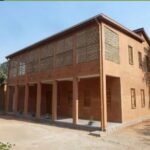
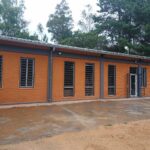
It’s the third time… Since the decision was made that we are giving up on the steel frame structure filled with earth-compressed brick walling, I have to start the exploration into the abyssal environmental expenses of concrete works. These decisions are usually made by contractors who will seemingly win on schedule because of the comfort of known practices, but on the ecological front will destroy all our beliefs and credibility.
So we count. How many linear meters of eucalyptus poles, formwork poles, gravillons by the ton, awful sand, water and steel rebars — and of course cement, dirty cement.
I was invited to participate in this artistic event right in the middle of this very pivotal decision on the project. I was not ready to give up on my goals to demonstrate best practices in construction — the most polluting sector — yet… I was too tired to battle. And this client proudly showcased his gazillions of ariary worth of katrafay doors, these very weird compressed pine-beam charpentes, and all the wood in the world installed in a very tiny, suffocating space.
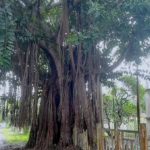
How, in that context, do you share your fondness for trees? Your addiction to Les Arbres Remarquables FB pages, your tics of taking pictures of weird trees everywhere you go, your childhood growing up in a beautiful jacaranda garden, and how your life changed 25 years ago when you had to leave Madagascar — marked with the plantation of the flamboyant now growing in your mom’s forgotten garden. Maybe the answer comes from my kids, 7 years ago, planting an aviavy in the middle of my tiny urban garden. Maybe it holds hope.
So what I will do for this exhibit is share experiences — from those who have no limits in their passion and path, and who have overcome so many challenges, from life-threatening ones to the most life-changing, all around trees.
I will be the tree that hides the forest. And this is what I told them:
What I’ll do is make people follow your path. Mostly online. I am going to build a forest in the https://www.facebook.com/antsonytontolomiaina exhibit, and you’ll be one of the trees.
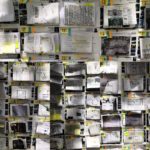
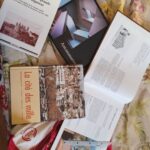
There will be QR codes all over the place as leaves (printed on used one-side paper from my architecture docs ????), and the trees will be poles of eucalyptus used on worksites. I collected dozens. So nothing will be new or bought. All reused.
Because you have an online and physical presence (as in you’ve been all over the country), I will make them follow you.
I am not aiming at originality — just experimenting with experiences.
II. Selected Voices (Participants’ “Palabres”)
Rainer Dolch
“Two-thirds of Madagascar’s endemic tree species are threatened with extinction. They store carbon and provide water, shade and shelter. They are vital for many other species of fungi, plants, animals, and people. Trees ensure the functioning of entire ecosystems. Protecting our trees is the only option for survival. Let’s work together to save them. Hazo tokana tsy mba ala.”
Tahina Roland Frédéric
https://www.linkedin.com/in/roland-fr%C3%A9d%C3%A9ric-tahina
« Ce que j’aime le plus chez les arbres, c’est qu’ils ne sont jamais vraiment seuls. Sous la terre, les champignons les relient entre eux, comme un réseau d’entraide invisible. Cette alliance silencieuse m’inspire : elle me rappelle que la forêt est d’abord une histoire de coopération. »
Chanelle Adams
https://www.linkedin.com/in/chanelleadams
“Ever since I was a little girl I liked to spend time with trees to connect and listen. When a hurricane knocked down a willow tree near my home I cried for days because it felt like losing a friend. I think that was the first time I understood how much trees hold for us. Now I study them in many forms and I keep returning to how they can mean many different things to different people. They are medicine, shelter, memory, and quiet witnesses to our lives. I look to them as reminders to stay steady and to keep growing in ways that are both rooted and open.”
Flo le Tsantaha
https://www.linkedin.com/in/florian-fraix-bavuz-7859aaa2
« Je m’intéresse à la biodiversité malgache car elle est pour moi très “extraterrestre”. C’est passionnant pour un botaniste de voir tout ce qui est endémique ici et de voir à quel point elle est foisonnante de diversité alors qu’elle a presque été entièrement rayée de la carte.
Et que tout le monde s’en fiche. On parle de fierté malgache, tout le monde porte des t-shirts za gasy, mais en vrai… tout ce qui est gasy est mésestimé, rabaissé, déprécié. J’essaie de montrer à quel point elle est utile, et surtout belle.
Et que ce pays qui pleure de sa pauvreté a tout ce qu’il faut pour s’en sortir, qu’il suffit d’ouvrir les yeux et valoriser ce que nous avons et ce que personne d’autre n’a sur terre. »
Sarobidy Rakotonarivo
https://www.linkedin.com/in/sarobidy-rakotonarivo-37a5b528
“Whenever I look at a tree, I never see it alone. I see the women collecting firewood, the children playing in its shade, the farmers who read the seasons in its leaves, the elders who remember when the forest was thicker. I’ve spent much of my life studying these human stories around trees, and one thing has become very clear to me: the people who live closest to forests are also their best guardians. Yet they are too often pushed aside, or worse, used in the name of conservation. I don’t believe in protecting trees from communities, but protecting trees with communities – and, whenever possible, by communities themselves. For me, a healthy forest is not just a green canopy on a map; it’s a place where local people have a real voice, real power, and a real share in the benefits that flow from the trees they’ve lived with for generations.”
III. Artistic References
My installation draws on a lineage of artists and architects who work with humble, site-born materials to reimagine ecological and social narratives. The reuse of eucalyptus poles parallels the approach of Francis Kéré, whose structures often transform locally available timber into spaces of community and reflection. It resonates with Tadashi Kawamata’s interventions, where reclaimed construction wood becomes temporary forests, nests, and architectures of fragility. The political weight of reused chantier materials also echoes Ibrahim Mahama’s monumental installations that give new meaning to discarded industrial elements. These references form an open conversation rather than a direct citation: they offer a vocabulary through which my own context—Madagascar’s ecological precarity, its forestry histories, and its everyday material realities—can be voiced through the simplest of elements. What emerges is a forest built not from ideal forms but from the lived residues of construction, labor, and hope.
IV. Curatorial Reading
Arbres à Palabres situates itself at the crossroads of architecture, ecology, and social testimony. In this installation, reclaimed eucalyptus poles—normally used as temporary formwork on construction sites—are reconfigured into a symbolic forest. Their presence carries several layers of meaning: they evoke the fragility of Madagascar’s ecosystems, the violence of extraction, but also the possibility of renewal through reuse.
The work speaks to the material ethics of Francis Kéré, whose architecture honors local knowledge and elevates modest materials to structures of dignity and communal gathering. Like Kéré’s reinterpretation of the palaver tree as a space of democratic exchange, this installation turns the worksite pole into a vertical witness, a conduit for collective memory.I was deeply influenced by Alejandro Aravena’s 2016 Venice Biennale, where he built the entire exhibition using debris and discarded materials from the previous year’s Architecture Biennale. Aravena, known for his work with Elemental and his commitment to social, incremental, and participatory architecture, has long argued that the profession must confront scarcity, rethink resources, and address the social and environmental realities of the built world rather than hide behind aesthetics or formal experimentation. His curatorship at Venice made this position unmistakable. By choosing to reuse waste—metal studs, timber offcuts, plastic panels, insulation residues—he exposed the Biennale’s own invisible footprint and confronted the architectural world with the uncomfortable truth of its material excess.
What struck me was not only the radical simplicity of the gesture, but the way it turned leftover matter into a narrative device: a physical argument about responsibility, extraction, and the backstage labor of construction. It was a reminder that the architect is never neutral, that the materials we specify carry histories, violences, and ecologies with them. Aravena’s work demonstrated that debris is not merely a by-product of building—it is evidence. It documents the systems we rely on, the industries we sustain, and the environmental debts we accumulate.
That approach stayed with me. It showed that the residues of building sites are not just leftovers—they can become structures of meaning, carriers of memory, and catalysts for critical reflection. They can also open a dialogue about who benefits and who pays the ecological and social cost of construction. In many ways, Aravena’s stance helped me understand that reuse is not only a technical solution but a political and pedagogical act.
This installation follows that lineage. By using eucalyptus poles, chantier scraps, charcoal, and recycled paper, it seeks to reveal rather than conceal the material realities behind our buildings. It asks what our footprint is, not just in terms of carbon, but in terms of ecosystems disrupted, forests cut, and invisible labor absorbed. It suggests that what we usually discard can become a place for awareness, dialogue, and reimagining—and that architecture, like Aravena proposed, can begin by acknowledging the truth of its own waste before it attempts to change the world.”
Paulo Freire taught us that any transformative pedagogy must begin with the concrete, with the lived world, with what he called “reading the world before reading the word.” In that spirit, the eucalyptus formwork poles of this installation—ordinary, damaged, disposable—become more than salvaged chantier elements. They are instruments for reading the ecological and social footprint of construction: cycles of extraction, the invisible labor of workers, the lives of trees entangled with our built environments. They turn material reality into a text that visitors must decipher.
Freire believed that education emerges from dialogue, from critical inquiry, and from an encounter with the real. His work in Brazil and beyond, particularly Pedagogy of the Oppressed, insisted that knowledge should never flow one-way from expert to passive learner, but circulate horizontally through shared experience and collective questioning. Inspired by this, the installation extends its pedagogical dimension through simple, low-impact tools: QR codes printed on tiny scraps of recycled architecture paper become “leaves” that guide visitors toward testimonies, field voices, and lived expertise.
Rather than relying on heavy wall texts or authoritative panels, these modest fragments enact Freire’s vision of accessible, participatory education. They invite curiosity rather than obedience. They encourage visitors to assemble meaning rather than receive it. The QR-based network echoes the Freirean idea that knowledge is decentralized, co-created, and grounded in reality, not imposed from above. Using reused paper and a lightweight digital format, the installation proposes a pedagogical gesture: environmental awareness built from humility, dialogue, and attention to what materials reveal.
In this sense, the forest becomes a Freirean classroom—open, horizontal, collaborative, and rooted in the real. It asks each visitor not only to look at the poles as objects, but to enter into conversation with the stories they carry: about extraction, resistance, hope, and the fragile ecologies that sustain us. Through this shared inquiry, the installation honors Freire’s belief that critical consciousness grows wherever people learn to question the world together.”
Ultimately, Arbres à Palabres is a forest assembled from residues — not to imitate nature, but to expose the tension between what we build and what we destroy, between exhaustion and hope. Each pole stands as both wound and possibility, each “leaf” (a reused scrap of architectural paper) as a voice of those who work for the survival of real forests. It is an invitation to follow these paths, to listen to the guardians of trees, and to reconsider the materials that shape our environments and our futures.
V. Installation :
An installation of reused chantier poles and living stories.
Waste Design Philosophy
The “greenest” version of the installation follows three principles:
Use only what already exists
Recycled or repurposed materials only; nothing newly purchased.
Design for disassembly
All elements can be taken apart and reused for future exhibitions.
Energy-light and maintenance-light
No screens, no electricity, no printing chemicals unless absolutely necessary.
Profiles & Longer Texts — to Share Without Paper
QR codes on tiny scraps of recycled paper
Links to online profiles (LinkedIn, website, Google Drive).
Minimal material, maximum access.
A simple website or blog page
Low-energy hosting, no heavy design.
An Instagram highlight
Low-carbon, already accessible, zero printing.
VI. Time and Date :
The exhibit will take please from January 17th to February at Hangar Zital in Ankorondrano, Antananarivo
Chapitre 1 – The Guardians #antsonytontolomiaina